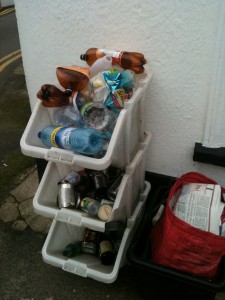
Funky looking, 3 compartment recycling bin

“Comprises of three compartments and a central bottle crusher to compress your waste with ease.”

“Made from recycled plastic”

“Each compartment has a door for bag removal and a small upper opening with a cover for waste deposit. The covers close tightly so that bad odours cannot escape.”

“Standard supermarket shopping bags can be inserted into each of the compartments for ease of use.”

£179.99 from http://www.ecocentric.co.uk/acatalog/Eco_Centric_Office_Bins_Ovetto_Recycling_Bin_-_Yellow_Blue_Green.html


Automatic fire !

Scandinavian HWAM fires have a heat sensitive spring that auto regulates the amount of air going into the combustion chamber of the fire, so that you continually get optimised buring of the wood:

  • More heat from the same amount of wood
  • Less ash
  • Less hassle
  • Less soot on the glass.

Video that shows the auto system (jump to 1 minute in !).

Above picture of the HWAM I30/55 that has the Nordic Ecolabel. For more info see

http://hwam.com/products/insert+selection/hwam+i+3055

Fire Heat Storage / Thermal Store

Create a thermal mass, with the chimney around the fire, so that post the fire dying out heat is slowly released into the room.

HWAM have a page on their soapstone system at http://hwam.com/hwam+advantages/heat+storage

UK HWAM Distributors:


MVHR :: A Passivhaus perspective

Reading a Passivhaus article they have these as the key Mechanical Ventilation Heat Recovery (MVHR) reasons:

  • firstly its purpose is to provide sufficient fresh air,
  • secondly it is to avoid draughts and discomfort and
  • finally it is to reduce energy demand;
    – without heat recovery, ventilation leads to unnecessary energy demand and can cause thermal discomfort.

In buildings with MVHR, fresh air is drawn in through a heat exchanger, past the stale air being extracted from the building. The heat exchanger is designed so that the exhaust air warms the incoming outside air, before it finally leaves the building. Importantly the two air streams do not mix, thereby maintaining high standards of fresh air supply throughout the home.

In order to circulate the fresh air throughout the home, two low energy fans are used; one on the supply and one on the extract. The fans only consume a fraction of the energy that the system manages to ‘harvest’ from the stale air. Measurements have shown that they can save more than ten times the amount of energy that they use.

Opening doors and windows

  • You can open windows and doors. Yes, in winter, you’d impact the integrity and efficiency of the system if you leave doors and windows for long periods of time. But even in a non MVHR / Passivhaus building, this is unlikely to occur.
    And steam, smells etc. are being naturally extracted, so this “venting” requirement is no longer there.
    In warm weather, it’s good to open doors and windows of a MVHR / Passivhaus building. Especially at night to let in the cooler air, that you can day time keep trapped in the house at that temp.

Appliance Energy Saving Tips

http://www.homebuilding.co.uk/unmissable-energy-saving-tips-by-appliances-online

Siemens have recently brought out a miracle A+++ fridge; the KG36EAW40. It has the best energy rating on the market right now. Annually it costs you £18 a year to run, compared to a more modest A rated model, which costs you approximately £51. That’s a saving of £33.

Get a frost free freezer

Don’t leave cooking appliances such as your microwave on standby. It wastes approximately 7kW of energy per day – annually that’s a huge £84 per appliance.

An induction hob is the most efficient hob you can get: it’s 90% more efficient than gas or electric, mainly because the hob only heats up when it recognises the pan so no energy is wasted when the pan isn’t present.

Another good tip is to use halogen lighting in your oven as they’re 20% more efficient and 36% brighter than standard light.

The Bosch Logixx WAS32461GB washing machine, which has a function that measures the exact amount of water needed depending on the weight of your wash. It means you won’t waste any extra water or energy to get the load washed. It’ll only cost you £22.68 a year to run, which is minuscule compared to other machines.

EcoBuild: Toilets (waterless urinal & sensor on water tap)

Two toilets and a commercial tap sensor stood out at the Ecobuild expo:

One of the efficiency and eco objectives is a house that is water efficient.

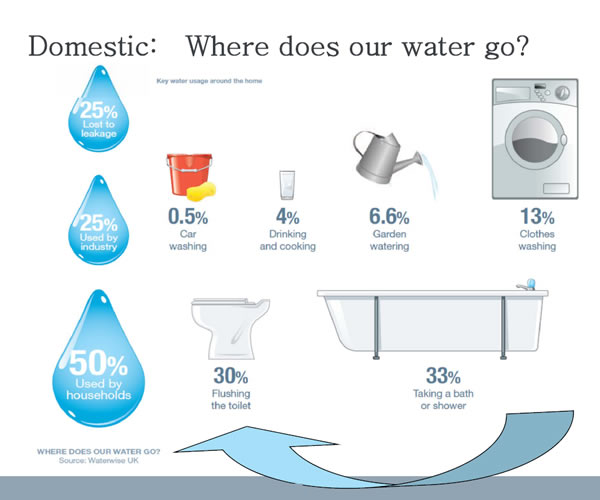
Two slides, from different sources on domestic water use / water consumption:

My initial straw polling, is getting a strong reaction to the idea of a urinal, let alone a waterless urinal, from  at least 50% of the girls reacting!

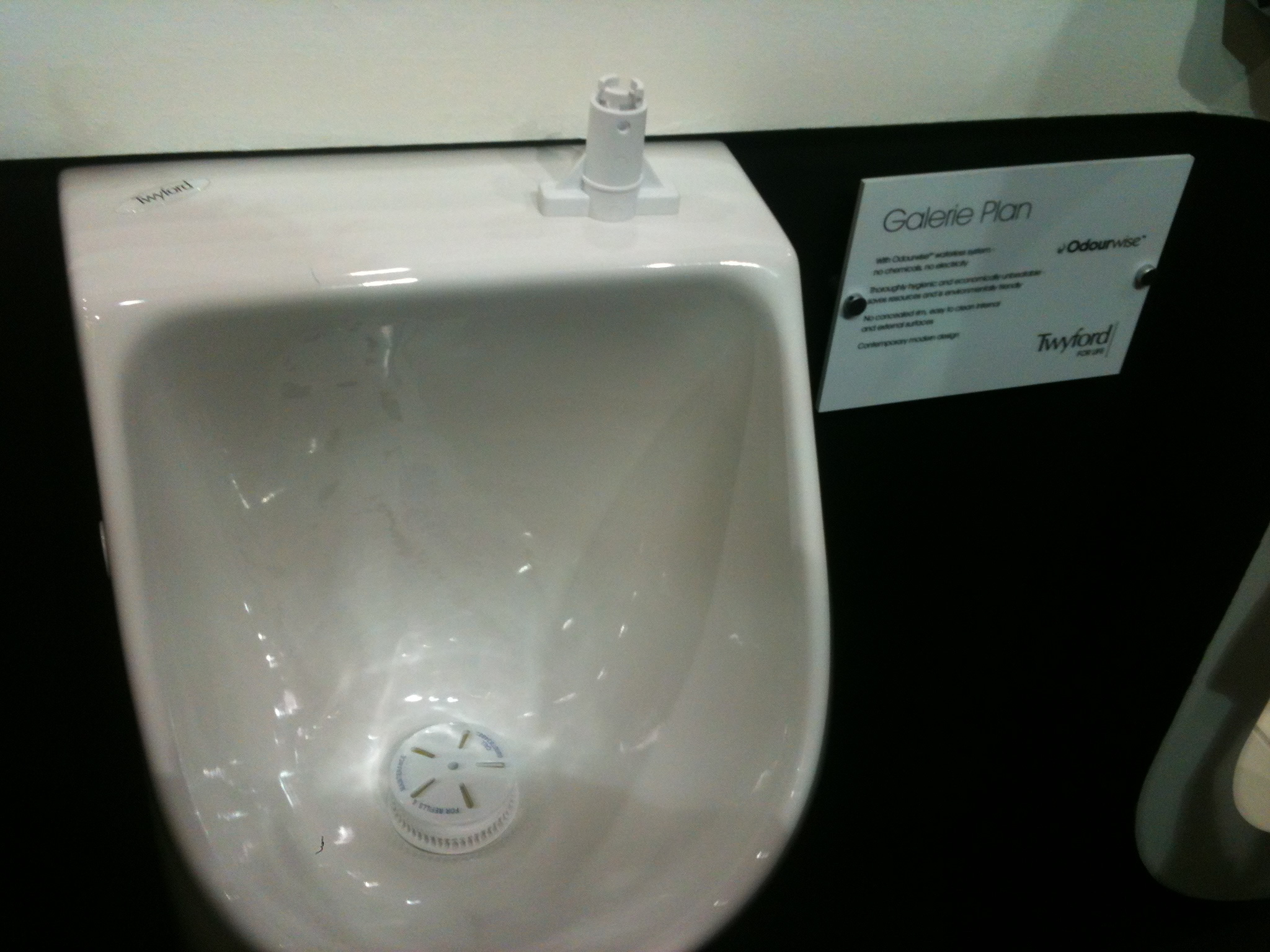
Waterless Urinal

This has the potential to drastically reduce the amount of water used in the house.

They are marketed as “clean, green, odour free and waterless”.

I had it all explained to me on the Odourwise and Twyford stands. The module that fits into the bottom of the urinal converts all uric acid to a form that prevents lime scale, clogging up the system, takes away the smell etc. It seems that urine and water are a big source of limescale and other loo waste pipe problems, hence trying to dilute this away with (usually) lots of water.

All you need to do, is a few times a year (depending on use levels) replace the cartridge. In this photo the plastic bit on the top is the device to extract the Odourwise bit so that it can be replaced with a new cartridge.

A google search reveals there are a few alternatives, so more research needed.

My current thought is a urinal in the bathroom  off the main living area and also one in the bathroom off the study.
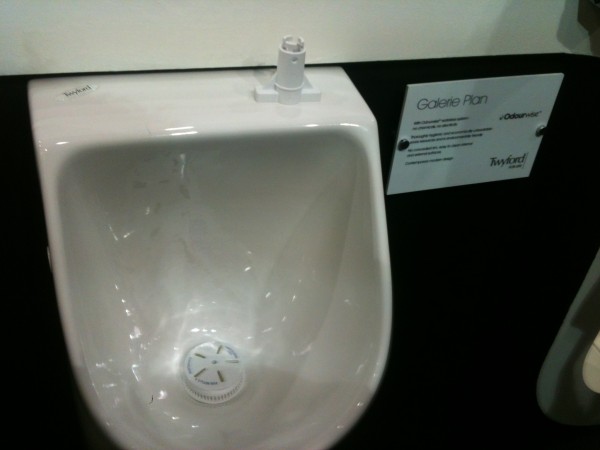
Also on show at Ecobuild 2012 will be the Odourwise™ Waterless urinals. Twyford Bathrooms offers the revolutionary Odourwise™ Waterless system for two of its urinal ranges, Centaurus and Galerie Plan. Centaurus is the first hybrid urinal that is truly waterless, combining maximum water savings with enhanced hygiene. The cutting-edge Odourwise™ Waterless technology requires neither chemicals nor electricity, keeping it eco-friendly as well as economical. The urinal is also entirely rimless, making it easy to clean (both within and outside the bowl). Installed with the Odourwise™ Waterless system, Galerie Plan offers the same cost-effective and eco-friendly benefits as Centaurus.

Toilet Sink Taps to be Sensor Driven?

Why use your hands to touch the tap to get the water flowing, before you’ve washed your hands ?

Why have the water running when hands aren’t beneath the taps ?

I need to check out the cost and any other implications. I assume they use a tiny amount of electricity, but best to check.

Combine the Sink and Loo ?

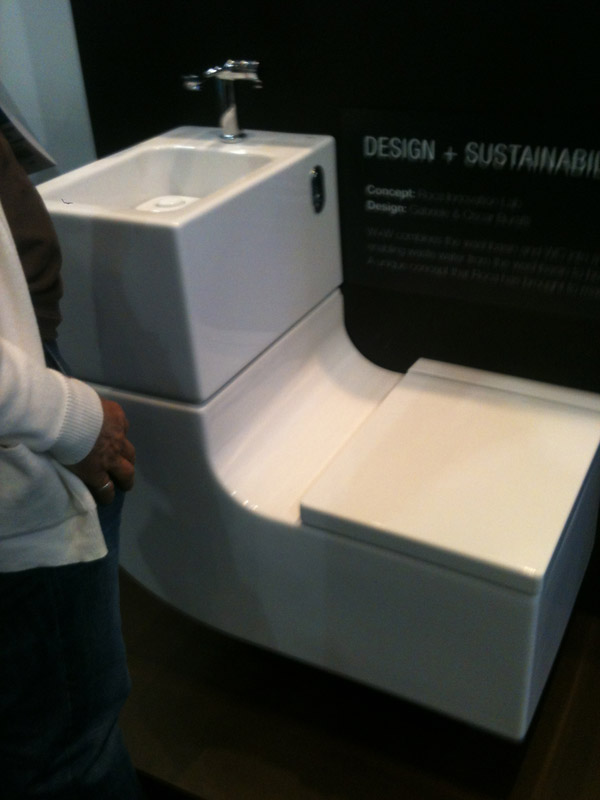
This great combined unit captures (there is an optional bypass if you don’t want it to, eg if you’ve cut your hand) the water you use to wash your hand and then stores this to flush the loo. Integrated 1 unit grey water system.

BUT, £2,500 !!!!!

I’m pretty sure I can have an entire house grey water system for a similar amount.
 

EcoBuild: Waste Water / Drain Water / Shower, Heat Recovery

At Passivhaus levels of energy efficiency hot water accounts for more energy than space heating.

At last weeks Ecobuild, I saw a couple of systems that do this. They capture the heat from hot water that is going down the drain and feed it back into the hot water system. It seems there are 2 systems:

  1. A vertical pipe that the hot water flows down, usually slowed, around the cold water mains supply. Their is heat exchange from the waste water to the cold water, that, in these systems typically, feeds into the water heater / hot water tank.

  2. A system linked to just the shower. So that the heat in the shower waste is immediately put back into the shower. As most showers have a thermostatic valve, this means an instant and guaranteed gain.

+ & – Thoughts

Check the cost of the system Vs the predicted and probable saving for an evaluation of how long the system will take to pay for itself.

  • One of the 2 systems at Ecobuild was the, €299 retail price, system, that you can see at http://zypho.eu/english.html. So price wise, VERY worth considering,  but need to see if:
    • Have to use, what looked like, the integrated shower tray cap / valve bit, or can this work with any shower tray and it’s drainage inlet?
    • Will it cope with sand if used as the post surf outside shower?
    • What is the cost implication of this on each shower Vs a system that copes with multiple showers and other hot water drain pipes (bath, washing machine, dish washer).
    • Does it reduce the cold water pressure? (Does this matter ?)
      I’ve emailed Zypho these questions 
    • Nice write up on the Zypho unit at Ecobuild on the HardHouse blog by Mark.
      – looks good, but questions the heat exchanger and it isn’t yet fully UK approved.
  • Cost Implications:

If used for an external, post surfing, shower, will the system cope with sand, mud, dirt etc?
– it does look like the  Bristol based shower tray system could be put in post a sand trap !
– could even have this bit under the floor in the house and not outside where the cold, frosts etc. could be a problem. It could then also link in to the water outflow from the washing machine, dishwasher and any other ground water outflows of warm / hot water.
–  http://shower-save.com/Joomla_SS/pdfs/Adaptor%20to%2040mm%20for%20RT1-e.pdf
–  http://shower-save.com/pdfs/Recoh-Tray%20grey%20water%20heat%20recovery.pdf

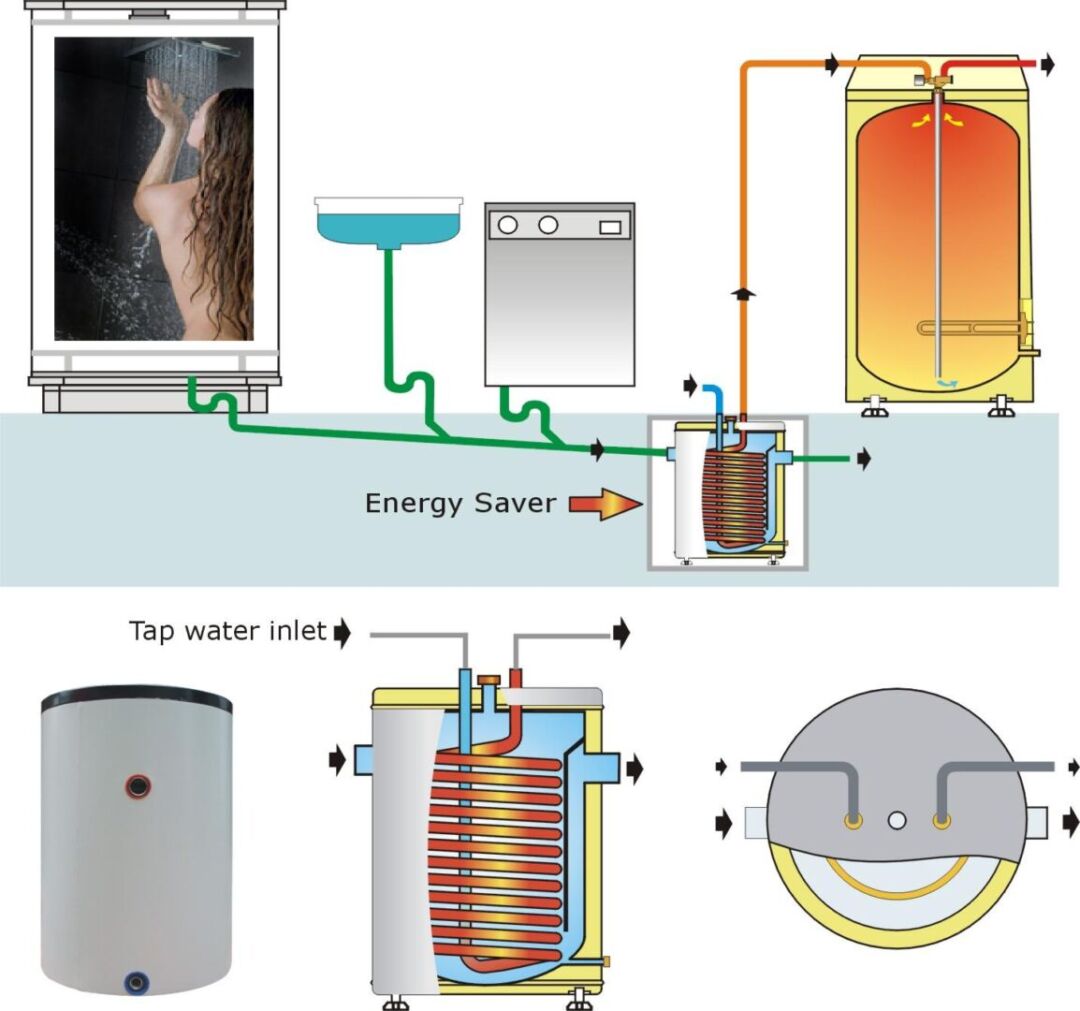
It seems that if you could get a single whole house heat recovery system that auto feeds the cold water supply to showers, and if they aren’t being used sends the preheated cold water to the water boiler (if it’s not full) would be the best. See the schematic below from http://www.gfxtechnology.com/H-3.pdf

This is also how it’s been set up in the schematic at Bristol (UK) based  http://shower-save.com/
 – also see animation they have at http://content.wavin.com/WAXUK.NSF/pages/Certus-ShowerSave-Animation-EN/$FILE/ShowerSave.swf

UK Water Heat Recovery Supplier Listing:

Test Data for Recoh Units:

From http://shower-save.com/gastec.html

  • Recoh-vert 61.2% efficient, with a mixer shower
  • Recoh-tray is 46.9% efficient, with a mixer shower

Shower-Save is even more efficient with a low flow rate or electric shower:

  • Recoh-vert 64.0% efficient with electric or other low flowrate shower
  • Recoh-tray is 52.6% efficient with electric or other low flowrate shower

Schematics of Waste Water Heat Recovery Systems

Notes from other Websites re these systems:

From http://www.gfxtechnology.com/H-3.pdf:

  • Typically, 80–90 percent of the energy used to heat water in the home goes down the drain. Heat exchangers capture some of the heat in drain-water, allowing it to be reused by incoming water. One type, called a gravity film exchange drain-water heat recovery system, has been found to save 25–30 percent of total water-heating energy needed.
  • This technology is compatible with all types of water heating systems, but it is especially suitable with on-demand water heaters and solar thermal systems. Prices range from $300–400 and paybacks are in the range of 2.5 to 7 years, depending on how often it is used.

From http://www.renewability.com/power_pipe/index.html:

  • Falling film heat exchangers have been around for decades. Other than utilizing the “falling film” effect, however, the Power-Pipe® has little in common with other Drain Water Heat Recovery (DWHR) devices.
  • First generation units suffer from high water pressure loss in the freshwater supply, which causes flow problems. Second generation units resolve the pressure loss issue by adopting a non-counter flow heat exchanger design, which delivers a low heat transfer performance.

Other Water Heat Exchange Systems & Discussions:

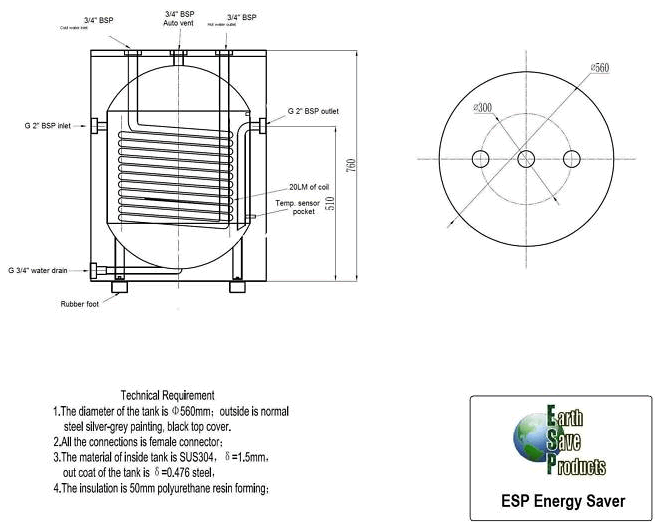
From Earth Save Products (bottom of the page) their Heat Squirrel – 120ltr heat recovery vessel (for domestic waste water)
Heat Squirrel - schematic
Heat Squirrel - installed

Change Your Behaviour – Bath water heat recovery

One behavioural solution to waste water heat recovery, is to just leave a hot bath, hot sink of water full to cool down and transfer it’s heat to the room(s) before you pull the plug. How often do we pull the plug on a bath of hot water to let that heat head off down the drain, when we could let it cool down (ie heat the interior or the house) first ?

Utility, shower and plant room

The idea is that in addition to a downstairs loo and room for shoes and coats, there will be a room for the washing machine, that also has in it a shower, sink, drying rack, and probably screened off, the “plant”.

The plant elements aren’t foliage etc. but the large bits of machinery for the house such as the hot water tank, Mechanical Ventilation with Heat Recovery (MVHR) unit etc.

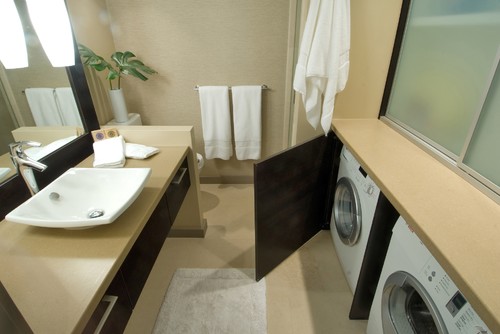
So, not a lot more on this at the moment, but spotted this photo, that could be a start of this room. ie put the washing machine in a cupboard ?

Waikiki Chic contemporary bathroom

Components:

  • Washing machine
  • Shower
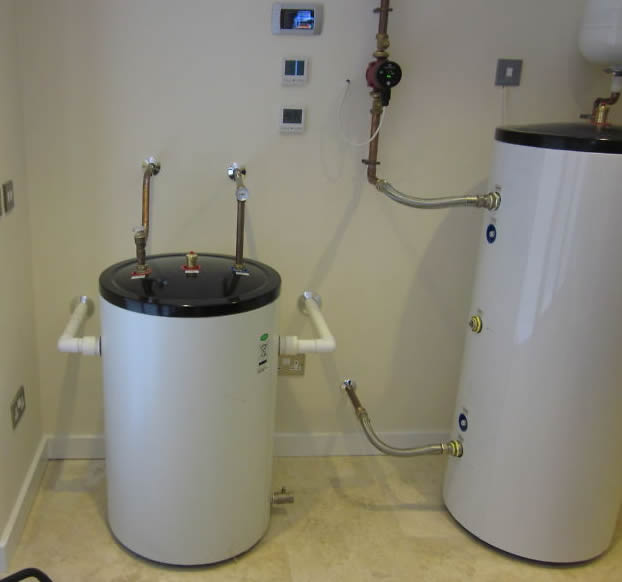
  • Hot water tank
  • MVHR unit
  • Sink
  • Drying area – potentially with a drip tray, as it will probably include wetsuits etc.

It’d make sense to look over the photos etc. for the coats, shoes etc. room.

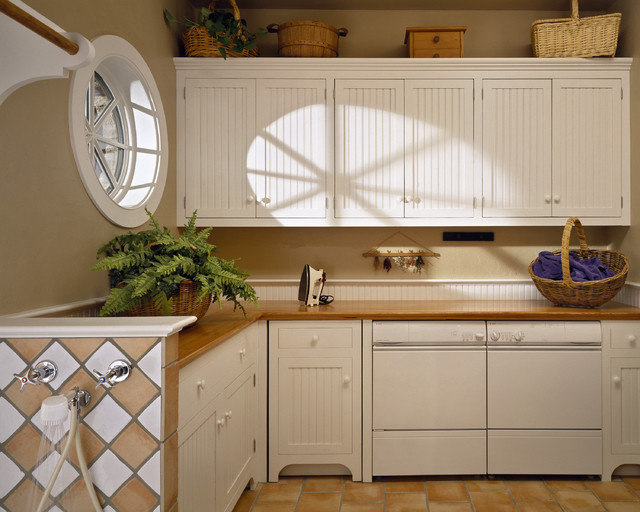
Not a fan of this look and feel, but the storage looks good for the utility plant room.

traditional-laundry-room

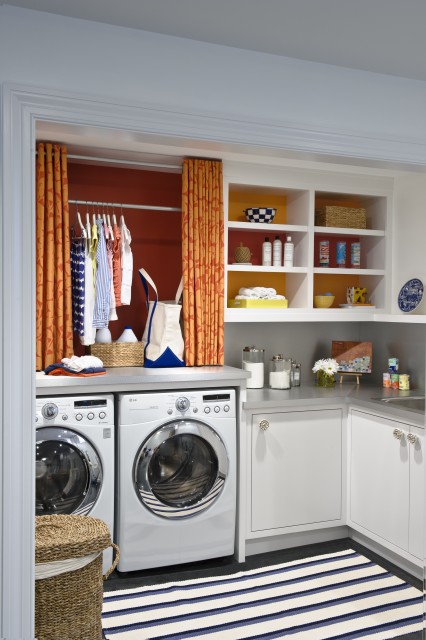
The idea below of an over the washing machines hanging rail could work well. But there also needs to be some full height hanging for wetsuits to dry.

over the washing machines hanging rail

hand rail could be elsewhere:

hanging rail

Washer and dryer platforms. The laundry room below puts the washer and dryer on a pedestal. I’m not having a drying machine, but it might be good to put the washing machine on a slight pedestal.

washing machine raised

Utility room sink to rinse wetsuits etc.

Also some counter top space.

The plant utility room might have extra space for the recycling (there will be some in the kitchen units).

IMG_1335

Some great kitchen ideas

Some great kitchen ideas in this post at http://www.houzz.com/ideabooks/846615?utm_source=Houzz&utm_campaign=updates&utm_medium=email&utm_content=gallery8&w=411212

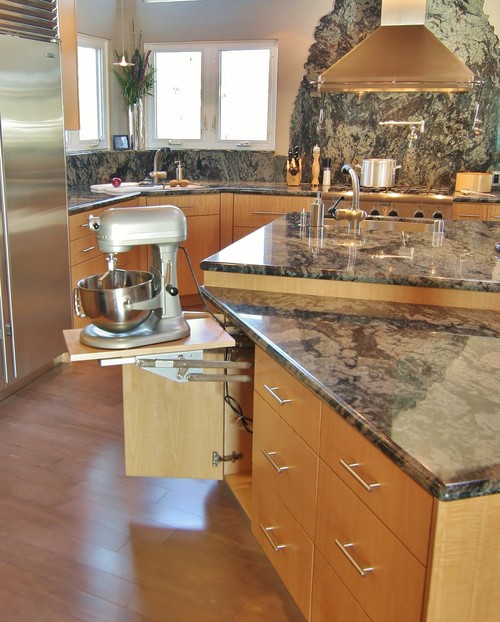
Not sure if this idea means a very inefficient cupboard, but a cool idea to take those big things off the kitchen surfaces.

Rio Del Mar, CA modern kitchen

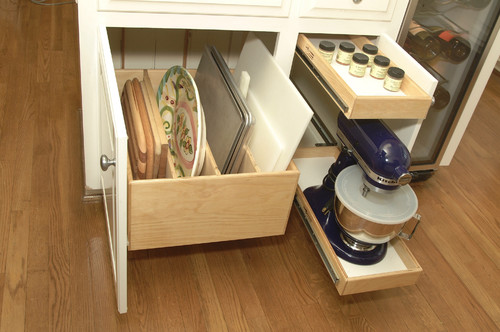
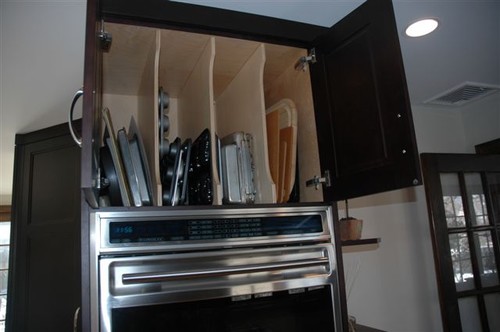
Design in somewhere for trays (baking and food trays, also cutting boards)

Kitchen Cabinets upgrade to Glide-Outs contemporary kitchen


Marble Kitchen modern kitchen

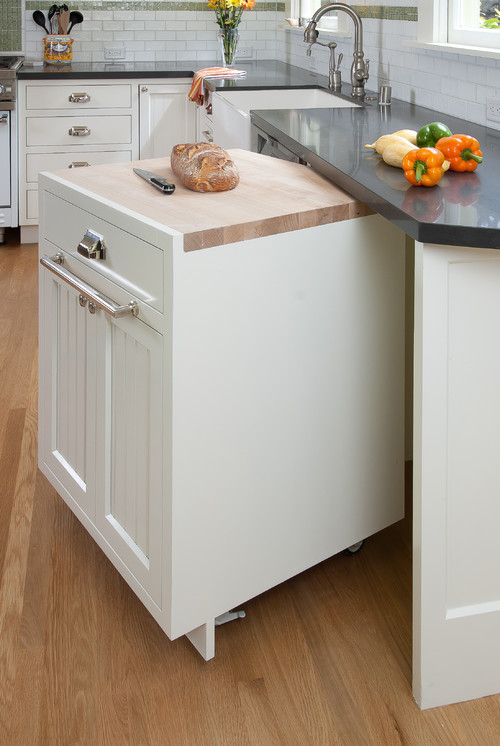
Check out this roll-around cabinet that tucks underneath your countertop !
– It can be moved to where it’s needed, then hidden away when not in use.

Haight Ashbury contemporary kitchen


Hot / warm water into the washing machine

Thanks to Simon, I ended up at a great evening at the Eden Project on Wednesday. It was run by the Cornwall Sustainable Building Trust. Some great speakers including Charlie Luxton who covered a lot of items I already knew about (it’s always great to get confirmation from somebody with heaps more experience than yourself thought !), and quite a few I didn’t.

Warm Water into your Washing Machine

For instance, modern washing machines have a single water inlet, for cold water. But what this means is that these modern washing machines are using electricity to heat the water to the desired temp for the selected wash. Eeeeek, we all know that due to (not only) transmission from power stations for most people, the efficiency of heating water by electricity is shocking (see figures below *).

How about making sure that there are mixer taps to give warm water eg 20 degrees into the back of your washing machine.

Water Temperatures

  • Central heating tends to run at 55 to 65 degrees C.
  • Under floor heating runs at around 45 degrees C.
  • A bath is going to be, 44 to 46 (a VERY hot bath) degrees C.
  • BUT need to occasionally boost the water in the tank to kill legionella:
    – 66°C Legionella die within 2 minutes
    – 60°C Legionella die within 32 minutes
    – 55°C Legionella die within 5 to 6 hours

Cement

He also mentioned that instead of cement (environmentally horrible stuff) go for GGBS  +/or fly ash cement. It seems these are cements made up from the by products of already in place (and here to stay for a while) industries such as blast furnaces and coal burning.


* Energy and Electricity

These figures are taken from an eco building book, the Green Building Bible (Volume 1):

  • 100 units of energy in fossil fuel into a typical UK power station, gives
  • 38.5 units of energy into the grid, of which a further 3.5 units are lost on transmission & distribution, so you only get
  • 35 units to a house, of which 13 lost through inefficient use

So 100 becomes 22 (or 35 if you have 100% efficient use, through good appliances, voltage regulation etc.)