Single Vs Double Glazing

I’m going to have a problem, sorry challenge.

The sliding doors from the planned living room at the bottom are due to be around 2.8m tall.

This is taller than most companies produce triple glazing. In part due to the total weight of the glazing units.

Triple glazing gives better insulation, and less thermal gain. But as this is north facing, the solar gain isn’t an issue.

  • The very best double glazed windows are already capable of being net heat contributors over the course of a heating season. In contrast, triple glazed windows slightly reduce the heat absorption characteristics of a window.

BUT, how much more expensive is triple glazing and how much better is it ?

  • http://www.homebuilding.co.uk/advice/key-choices/green/triple-glazing
  • Current Building Regulations insist that any window you install today should have a U-value no worse than 1.6.
    – for  reference, walls should be less than 0.3. So windows are a thermal weak spot.
  • PassivHaus standard requires triple glazed windows with a Uvalue of no more than 0.8.
  • Although a U-value as low as 0.8 sounds very impressive, the additional energy we are saving is minuscule whilst the payback time for triple glazing (like double glazing) is high compared to other energy-efficiency improvements. So why bother ?

The key benefits are really to do with comfort. If you insulate the walls, roof and floor of a house, and you ignore the glazing, you end up with cold spots surrounding the windows at night, which cause draughts, draw heat away from you if you sit next to them, and can result in streams of condensation running down the panes. So, in essence, the standard of glazing has to match the standard of the insulation elsewhere in the house, so that the warm wrapping around the house performs consistently.

The PassivHaus Institute, in Germany, has looked at the surface temp­eratures on various forms of glazing when it gets really cold outside, and the internal air temperature is designed to be at 21°C:

  • Next to a single-glazed window, the internal surface temperature is around 1°C.
  • Next to a double-glazed window (2000 vintage), the surface temperature is around 11°C.
  • Next to a modern, energy-efficient double-glazed window, the surface temperature is 16°C.
  • Next to a triple-glazed window, with a centre-pane U-value of just 0.65, the temperature is 18°C.

So whilst triple glazing may make little difference to your heating bills, you will notice the difference inside the house.

BUT, this is all based on the situation in Germany, where it’s a lot colder than the UK. Cornwall is itself a relatively warm bit of the UK.

The upshot of this is that there are many who argue that triple glazing simply doesn’t make sense in a climate like ours. Triple glazing is more costly to produce, produces much heavier sections and has an embodied energy approximately 50% higher than double glazing.

An alternative option that might make more sense is to revisit the traditional practice of drawing curtains across windows after dark. It may be low-tech, in comparison with glazed cavities filled with krypton, but it’s something of a natural British habit and it does cut down on heat loss. Perhaps it’s time we paid attention to improving the heat retention characteristics of curtains and blinds, rather than continuing to engineer glazing units to ever lower and lower U-values.

  • Maybe, as a life style strategy, I’ll have curtains, that I might only draw when I go to bed, or some time after it gets dark. But curtains and top efficiency double glazing could be the way to go.

UK Solar Hot Water Trial Findings

The Energy Saving Trust did a survery on a large number of UK and Republic of Ireland solar hot water systems.

PDF report on the survey >>

Key Points

  • There were 54 flat-plate systems in the trial.
  • There were 34 evacuated-tube systems in the trial.
    • There was no difference in the annual solar energy yield observed between solar installations using flat-plate solar collectors and those using evacuated-tube solar collectors. This may be because although evacuated-tube collectors have higher insulation, flat-plate solar collectors generally have a larger working area as a proportion of the collector size.
So there are none of the “new” Thermodynamic Panels in the survey. These do appear to be different and better. Providing 24 hour hot water.

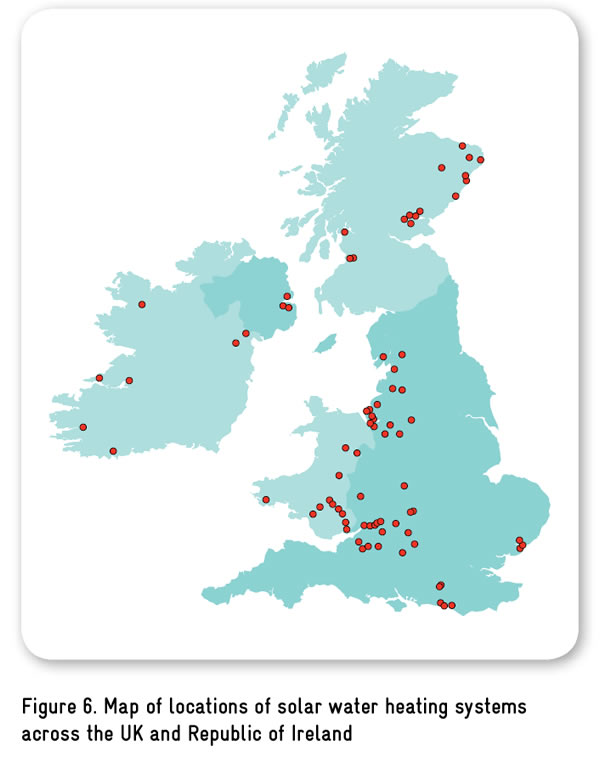
Distribution of the surveyed / trial locations:

So for Silver Spray in Cornwall, should get better results as more sunshine:

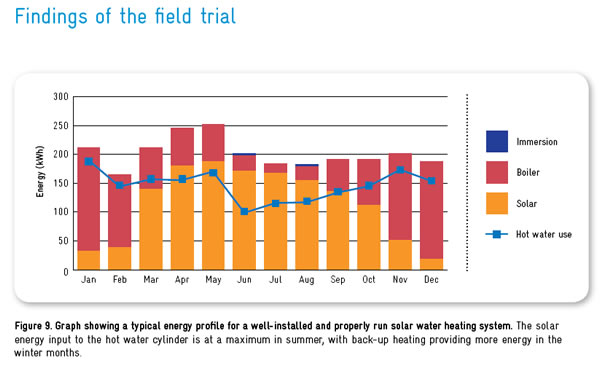
The solar energy input to the hot water cylinder is at a maximum in summer, with back-up heating providing more energy in the winter months.

It’s key to set the backup (non solar) heating system to run so that the solar heating can be most effective and the house occupants have hot water when desired.

How to improve the performance of a solar water heating system:

  • Using boiler timers and/or solar controllers to ensure that water is only heated by the back-up heating sources after the water has been heated to the maximum extent possible by the sun.
    • Timing of back-up heating and hot water use. Systems
      provided more energy when the back-up heating was
      used just before the main hot water use or at the end of
      the day. This provides a better opportunity for the solar
      collector to heat the water rather than using the back-up.
  • Having an adequately sized dedicated solar volume (that is, a portion that can only be heated by the solar water heating system). Where a dedicated solar volume is not used (for example in systems that do not require the existing cylinder to be changed), the timing of back-up heating has a particularly important impact on performance.
  • Insulation is a vital part of this, as systems with poorly insulated storage cylinders can suffer from inadequate hot water provision in the mornings.

Key Findings:

  • Well installed and properly used systems can provide around 60% of the years hot water.
    • Across the whole trial, the proportion of domestic hot water energy provided by solar power ranged between 9 per cent and 98 per cent (with a median of 39 per cent).
  • Plenty of other findings, see the report.

Customer / Consumer Advice

What to expect from your installer:

  • All MCS installers should be able to provide a detailed breakdown of the specification and costs of their proposed system. They should:
    • Complete a technical survey.
    • Explain how they calculated the size of the system to be appropriate for your hot water usage.
    • Provide an estimate of how much heat will be produced by any proposed system.
    • Supply clear, easy-to-understand and detailed information and advice on how best to use the system and operating instructions.
    • Explain how the system will be installed and if there will be any disruption to your property.
    • Install and set controls and settings to ensure you get the most out of your solar water heating system.
    • Provide clear and easy-to-understand information on product and workmanship warranties.

Stairs

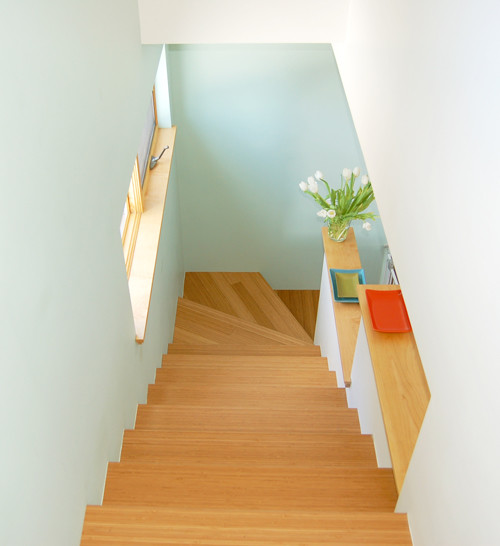
Although I prefer the look and feel of these bamboo stairs:

15 Rockledge modern staircase
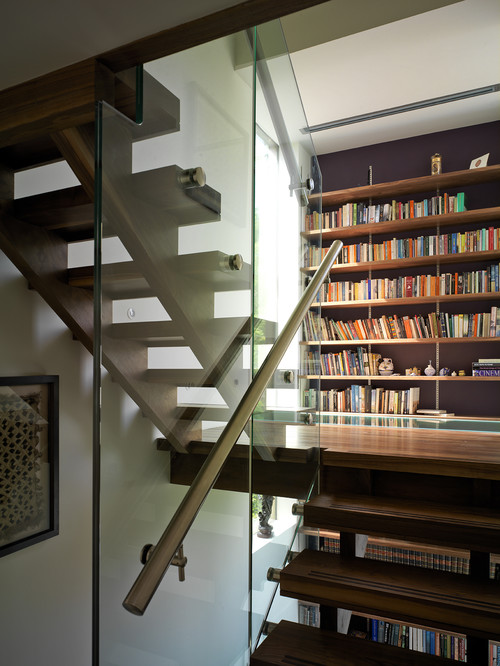
I do like the idea of a bookcase on the landing. But need to look at / check there is still plenty of width on the landings:
exedra architects contemporary staircase

Nice look & feel :: Bathroom

Some more inspiration from Houzz:

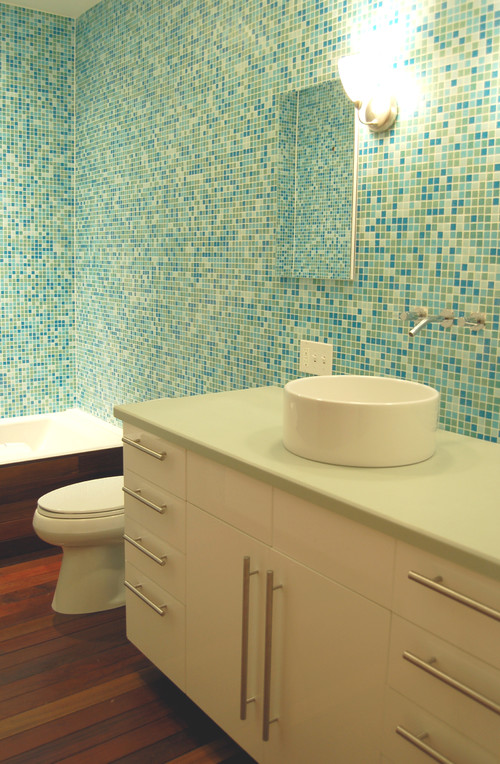
Nice bathroom wall tiles (but would this be a pain to maintain, clean etc ?):

bathroom contemporary bathroom
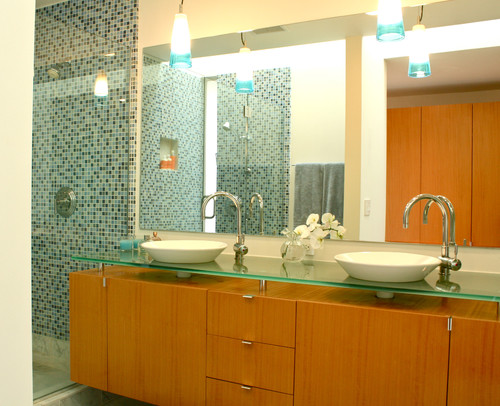
This double sink setup is nice, but how about bamboo for the surface and not glass. More eco, will show marks less and could tie in with a bamboo flooring ?
  • Could have the same bamboo for the kitchen worktops and the bathroom surfaces ?
Master Bathroom contemporary bathroom

Nice look & feel :: Fire, kitchen, stairs

Some nice ideas, look & feel vibe etc. from Houzz.

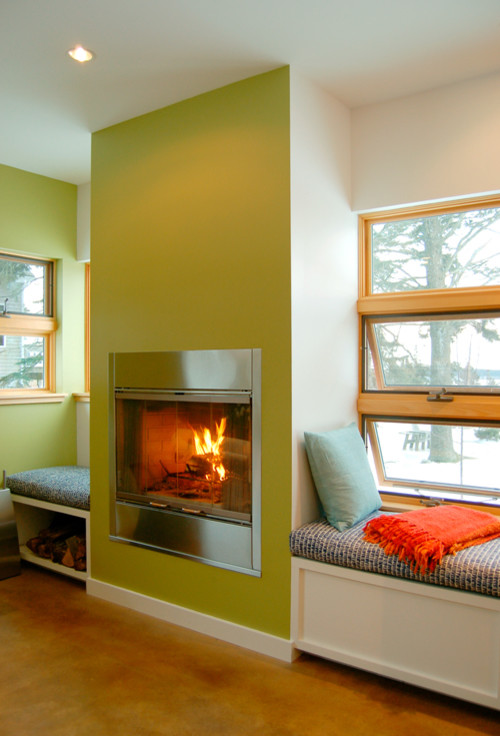
Nice enclosed fire, with fire side storage and seating:
15 Rockledge modern
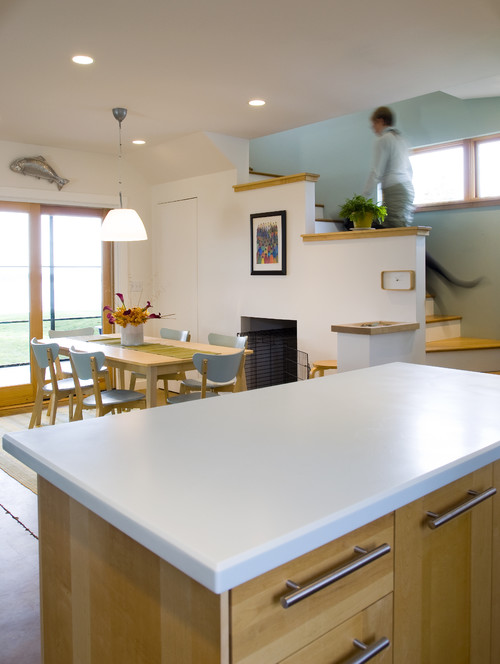
Nice look and feel to kitchen and stairs:
spruce head island additional images contemporary kitchen

Bamboo “wood” stairs:

15 Rockledge modern staircase
Which could be on just the horizontal sections like for:
spruce head island additional images contemporary kitchen

GRP windows ?

I saw a stand at the  the Ecobuild show with great looking GRP windows and doors.

Apparently cheaper and better than Alu clad windows for sea environment resistance and also cheaper.

I’ve been in touch with Yprado. Their reply is in italics below. This mirrors what is in their brochures.

Posting to the Green Building Forum got a discussion going, including:

I pioneered pultruded GRP windows in UK over 10 years ago – as ‘Pultec’, (PULtrusion TEChnology) – still available but now owned by Yprado UK Ltd, in Bristol and highly successful. FRP composite materials (like carbon-fibre, fibreglass etc) are not just for windows but a worldwide development for superior performance outdoors. Best example: New Boeing 787 Dream-Liner is first aircraft to progress beyond aluminium to ‘FRP composites’ for wings and body, for greater strength, longer life and better sustainability! Definitely the window frame material of the future, as already happening in North America. Lower U values due to inherently low thermal conductance of material (65% glass, fibres), 75 year life! Impervious to all weather, chemicals and salt corrosion (coastal) and even termites; Indestructible by natural forces. Zero maintenance yet unlimited repair/repaint options if required! Double and triple glazing, solar control, acoustic, the lot! Well worth looking into! (www.yprado.co.uk) Final news? Lower cost than timber/aluminium windows by a good margin!

Also from the Green Building Forum:

Both Velfac and ProTec were exhibiting GRP/timber composites at EcoBuild.
– I only saw / noticed the Yprado GRP products at the show, but will email the others.


Yprado Email about their GRP Windows and Doors

Pultec® pultruded glass reinforced composite windows are made from the same advanced composite materials technology as the new Boeing 787. ‘Composites’ are a significant technological breakthrough World-wide, in the quest for increasingly durable, lighter, stronger and more sustainable materials generally – not just for windows – but having adopted that technology for fenestration, we find the benefits supersede the performance of all other window frame materials, by some considerable margin, as detailed below.

What is even better is that our customers agree with us and tend to continue to use us long after their first scheme has been completed.

Pultec® is setting new standards of energy efficiency, durability and sustainability.

Summary of advantages:-

  • · Sustainability:
    • “A” Rated in BRE Green Guide to Specification for Sustainable Construction (UK)
    • BREEAM: 4½ extra credits potentially available.
    • 22% is from a recycled source. Product 100% recyclable upon disposal. (see update below)
    • 65% glass content, (silica/sand, the most abundant substance on the planet)
    • Sensitivity Report attached, quantifying environmental credentials by sustainability consultants Price & Myers, London.
  • Energy Efficiency:
    • “U” values 0.8 – 1.6 “U” W/M2K on the total window. 1.2 U value achieved with double glazing only, no need for triple (thus cheaper and less wear on hinges)
    • Low embodied energy in pultrusion manufacturing process
  •  Durability:
    • Twice the strength to weight ratio of mild steel – cannot deform like aluminium
    • 75 years service life + 12 year Warranty.
    • Negligible coefficient of expansion, even if coated black
    • Performance unaffected in temperatures between +100C and -100C
    • Impervious to UV degradation
    • Impervious to salt corrosion and water
    • Impervious to the harshest weather – effectively, indestructible by natural forces.
    • Impervious to termites – ( hugely beneficial in Southern climates)
  • · General performance:
    • Robust – used on Young Mental Offenders Secure Units – Meets MOD anti-terrorist glazing requirements – DMG2 “Normal”
    • Secured by Design accredited – Police preferred specification – including both BS 7950 and PAS 23/24
    • Zero maintenance required – however, surface damage, structural repairs and re-painting can be easily undertaken on site, with no consequential liability for future applications.
    • High resistance to impact damage – will not deform under impact.
    • Price competitivewith aluminium
    • Any RAL colour available (200+ options)
    • Does not affect radio waves
    • Has a high dielectric capability
    • Impervious to all chemicals and most acids.

Pultec® has been described by the Construction Director of Europe’s largest hotel chain, as “Totally the future for commercial windows, nothing else even comes close”.


Also have a look at the blog post about the Life cycle of window materials – energy consumption and environmental impacts. This survey didn’t include GRP windows.


2013 November Updates from Yprado.co.uk Website

How Yprado Meets Today’s Sustainability Requirements

Category Benefits from Yprado GRP Windows
Sustainability (of source and in manufacture) Manufactured from 65% glass (33% recycled) and only 5% oil derivatives
No volatile organic constituents within material (VOCs)
Temperature of pultrusion process is only 150C (Thus, low embodied energy)
Non toxic, non carcinogenic, non harmful process and product
Ozone Depletion Ozone Depletion Potential (ODP) = zero, thus ‘ZODP’
No chlorine or other ozone damaging substances are released
CO2 emissions
Greenhouse gas
Global Warming
Climate change
Global warming Potential (GWP) = zero
No hardwood, so Rainforests left intact to allow Nature to continue to absorb CO2.
No CFCs, HCFCs or other greenhouse gases or hazardous substances
Material is inert and does not leach out chemicals during life
Energy Efficiency Lowest thermal conductivity of all window materials
No metal reinforcing means no cold bridge, thus maximising insulation
‘U’ values typically 0.6 – 1.6 WM2K (Bldg Regs require 1.8)
Uniquely, Yprado can achieve both 1.4 U value and Rw 41 acoustics, in same unit!
Strength and security Strength of profile negates the need for metal reinforcing inserts.
Police standard ‘Secured by Design’ is met via BS 7950 compliance
Tensile strength is actually greater than steel – weight for weight
Frames are totally rigid, do not flex, nor need glass unit for squareness.
Thermal movement Being 65% glass, the profile has negligible expansion/contraction in any colour, even black. This stability avoids maintenance adjustments in Summer/Winter.
Coefficient of expansion is similar to glass, thus no friction between profile and glass unit, which prolongs life of D/G sealed unit.
Life expectancy
Warranty period
Surface finish
Up to 75 years design life, since fibreglass is unaffected by the elements and does not weaken, corrode or deteriorate over time.
20 year Warranty on window frames
Colour is for aesthetic reasons only – not to protect it like timber or aluminium.
Life of finish exceeds 20 years – but unlike powder coating or PVC, can be re-applied at any stage to further extend life by a similar 20 year period.
Maintenance
Reparability
Practicality in situ
The joy of fibreglass is that it requires no maintenance – yet is fully reparable
Damaged sections can be easily repaired with an epoxy kit and painted.
Unaffected by rain, wind, sun or salt sea spray, climatically indestructible
Life cycle analysis
‘Best value’
Whole Life Cost
50 – 75 year life expectancy is longer than for any other material
WLC study by BRE proves ‘best value’ over PVC and Ali, over 30 years.
But 20 – 45 years life still remains, to widen cost and carbon benefits.
Case study on Softwood reveals Yprado is 50% cheaper after necessary maintenance
Disposal
Re-use
BRE Study Group advise grinding down waste to use as filler
Adding this filler to concrete acts as binding agent for greater strength
Noise reduction The high density frame section helps to reduce noise, enabling a higher dBR sound reduction to be achieved over other window materials for any given glass specification. Rw 38 and dBr 42.9 certified as standard.
Uniquely, Yprado can achieve both Rw 41 and 1.4 U value in the same unit!
Bio-degradability Zero. Yprado’s success is that it cannot bio-degrade, so requires no protection (and maintenance) from doing so, unlike timber and aluminium. Bio-degradable external building products are not advisable in UK maritime climate – hence having been largely eliminated now, from modern methods of construction (MMC)
Timber bio-degrading, releases the greenhouse gas, ‘Methane’ (ex BRE)

Possible shower wall idea

Potentially great alternative to tiles for a shower wall !

100 Ensuites to Inspire contemporary bathroom
and could potentially have the glass made from recyled materials !
  • Internal wall / surface sheets from recycled glass
  • Decoran glass ceramic, formed from 100% recycled float glass, is a revolutionary and highly versatile material, with the combined characteristics of glass and natural stone. Primarily aimed at internal applications as an interior cladding material, offers either the warm opacity of natural stone, or refined, contemporary levels of translucency – and even transparency – coupled with an unrivaled anti-stain quality and durability.
    Decoran glass ceramic is the luxury solution for interior and non anchored applications, including internal linings, feature walls, kitchen and bar surfaces, flooring and stairs, memorials, screens, vanity tops and sinks, and should be specified as a stone slab material.
    With a competitive edge over translucent stone rival Onyx, in terms of price, sustainability and evenness of colour, glass ceramic has unrivalled anti-stain qualities, as well as highly enviable environmental credentials, as no resins are used in the bonding process. Instead, glass crystals are heated to a sintering point and then control-cooled.’

Rainwater harvesting

If there is going to be rainwater harvesting:

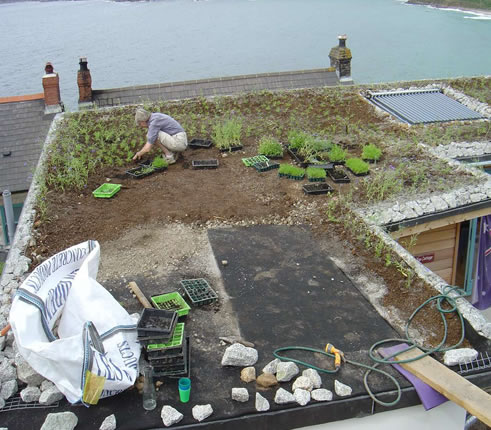
  • “Green / grass” roofs may mean little roof water run-off.
  • It seems that people tend to either go for a Grey Water recycling or a Rain Water harvesting system, not both. Have to cost these both up.

Anyway, if there is going to be a rainwater harvesting system, it would seem that putting the storage tanks for this on the west side of the house could be ideal.

  • This side of the house should have little if any people traffic.
  • The roofs could all be sloped to drain to the west so that the drain pipes could flow down to a single rain water harvesting tank.