At Passivhaus levels of energy efficiency hot water accounts for more energy than space heating.
At last weeks Ecobuild, I saw a couple of systems that do this. They capture the heat from hot water that is going down the drain and feed it back into the hot water system. It seems there are 2 systems:
- A vertical pipe that the hot water flows down, usually slowed, around the cold water mains supply. Their is heat exchange from the waste water to the cold water, that, in these systems typically, feeds into the water heater / hot water tank.
- A system linked to just the shower. So that the heat in the shower waste is immediately put back into the shower. As most showers have a thermostatic valve, this means an instant and guaranteed gain.
+ & – Thoughts
Check the cost of the system Vs the predicted and probable saving for an evaluation of how long the system will take to pay for itself.
- One of the 2 systems at Ecobuild was the, €299 retail price, system, that you can see at http://zypho.eu/english.html. So price wise, VERY worth considering, but need to see if:
- Have to use, what looked like, the integrated shower tray cap / valve bit, or can this work with any shower tray and it’s drainage inlet?
- Will it cope with sand if used as the post surf outside shower?
- What is the cost implication of this on each shower Vs a system that copes with multiple showers and other hot water drain pipes (bath, washing machine, dish washer).
- Does it reduce the cold water pressure? (Does this matter ?)
I’ve emailed Zypho these questions
- Nice write up on the Zypho unit at Ecobuild on the HardHouse blog by Mark.
– looks good, but questions the heat exchanger and it isn’t yet fully UK approved.
- Cost Implications:
If used for an external, post surfing, shower, will the system cope with sand, mud, dirt etc?
– it does look like the Bristol based shower tray system could be put in post a sand trap !
– could even have this bit under the floor in the house and not outside where the cold, frosts etc. could be a problem. It could then also link in to the water outflow from the washing machine, dishwasher and any other ground water outflows of warm / hot water.
– http://shower-save.com/Joomla_SS/pdfs/Adaptor%20to%2040mm%20for%20RT1-e.pdf
– http://shower-save.com/pdfs/Recoh-Tray%20grey%20water%20heat%20recovery.pdf
|
Per Shower |
Vertical Pipe |
| + Point |
- More efficient as waste water heat put straight back into the shower being taken.
|
- Could mean one system to grab the heat from hot water from multiple showers / baths / sinks / washing machines / dish washer etc.
- Apparently more efficient, as the falling water naturally coats the sides of the pipe (not just the bottom)
|
| – Point |
- Does this reduce the shower pressure ?
- Does the system cope fine with shower problems such as hair blocking them up ?
|
- You could be sending warmed cold water to an already full heating system. eg You run a bath and by the time you empty the bath the tank has already re-filled itself.
- Only works for waster water that is on the first floor so that it can flow down the vertical pipe. Seems to have been developed in the US where it can be fitted in the typically occurring basement water inflows.
|
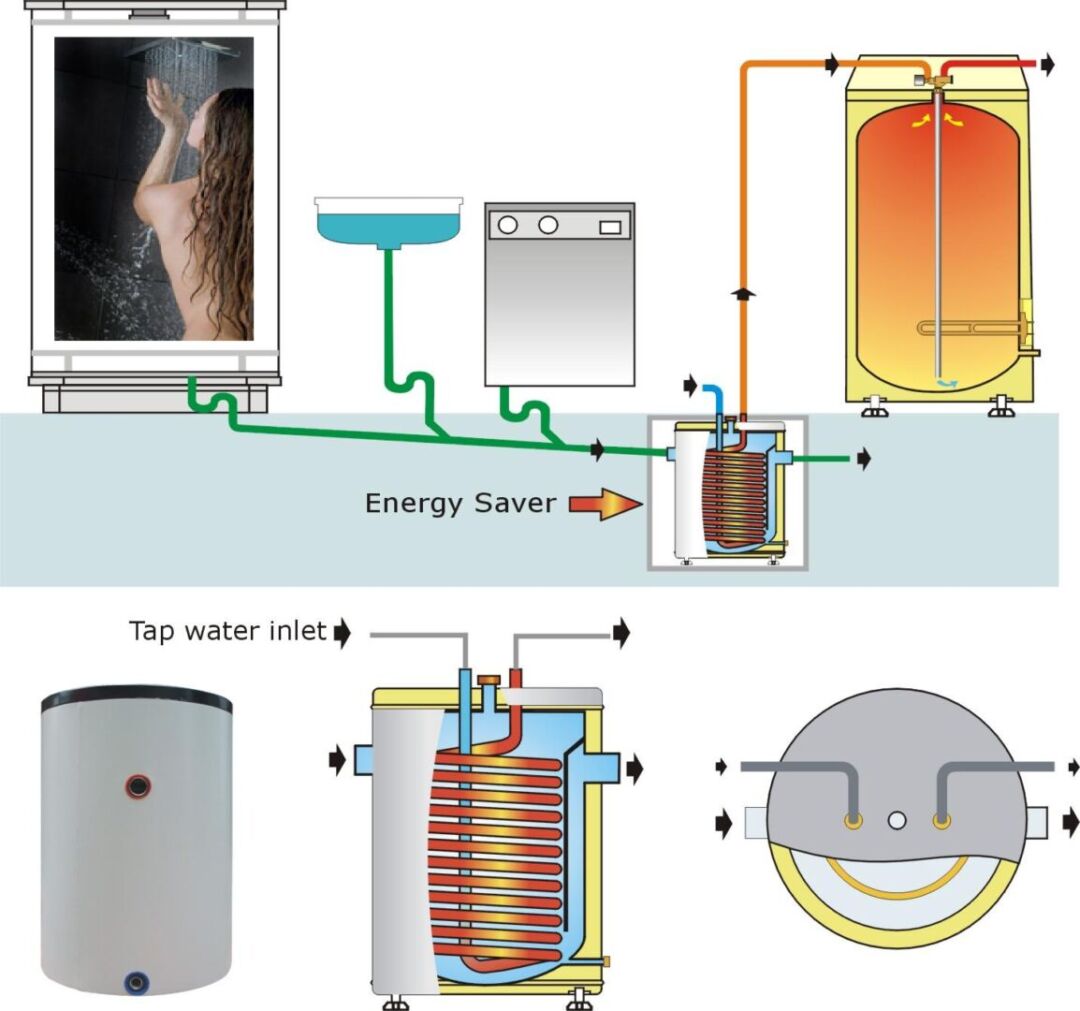
It seems that if you could get a single whole house heat recovery system that auto feeds the cold water supply to showers, and if they aren’t being used sends the preheated cold water to the water boiler (if it’s not full) would be the best. See the schematic below from http://www.gfxtechnology.com/H-3.pdf
This is also how it’s been set up in the schematic at Bristol (UK) based http://shower-save.com/
– also see animation they have at http://content.wavin.com/WAXUK.NSF/pages/Certus-ShowerSave-Animation-EN/$FILE/ShowerSave.swf
UK Water Heat Recovery Supplier Listing:
- Bristol based “Shower-Save.com“
- They both have full SAP-Q and WRAS approval, so it is fine to use in the UK.
- The Recoh-vert (for use with upstairs showers), the Recoh-tray which is a heat exchanger integrated into a shower base (for use anywhere)
Test Data for Recoh Units:
From http://shower-save.com/gastec.html
- Recoh-vert 61.2% efficient, with a mixer shower
- Recoh-tray is 46.9% efficient, with a mixer shower
Shower-Save is even more efficient with a low flow rate or electric shower:
- Recoh-vert 64.0% efficient with electric or other low flowrate shower
- Recoh-tray is 52.6% efficient with electric or other low flowrate shower
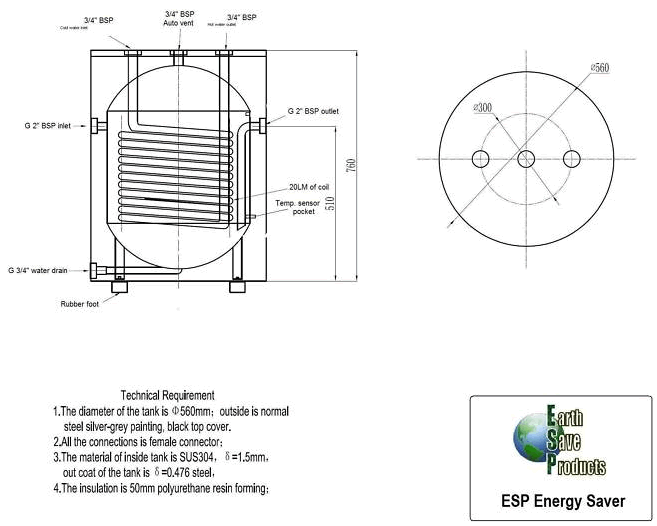
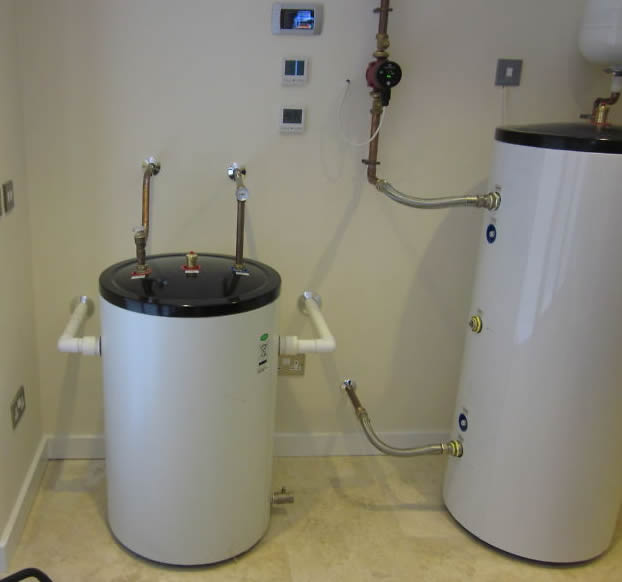
Schematics of Waste Water Heat Recovery Systems
Notes from other Websites re these systems:
From http://www.gfxtechnology.com/H-3.pdf:
- Typically, 80–90 percent of the energy used to heat water in the home goes down the drain. Heat exchangers capture some of the heat in drain-water, allowing it to be reused by incoming water. One type, called a gravity film exchange drain-water heat recovery system, has been found to save 25–30 percent of total water-heating energy needed.
- This technology is compatible with all types of water heating systems, but it is especially suitable with on-demand water heaters and solar thermal systems. Prices range from $300–400 and paybacks are in the range of 2.5 to 7 years, depending on how often it is used.
From http://www.renewability.com/power_pipe/index.html:
- Falling film heat exchangers have been around for decades. Other than utilizing the “falling film” effect, however, the Power-Pipe® has little in common with other Drain Water Heat Recovery (DWHR) devices.
- First generation units suffer from high water pressure loss in the freshwater supply, which causes flow problems. Second generation units resolve the pressure loss issue by adopting a non-counter flow heat exchanger design, which delivers a low heat transfer performance.
Other Water Heat Exchange Systems & Discussions:
From
Earth Save Products (bottom of the page) their
Heat Squirrel – 120ltr heat recovery vessel (for domestic waste water)Change Your Behaviour – Bath water heat recovery
One behavioural solution to waste water heat recovery, is to just leave a hot bath, hot sink of water full to cool down and transfer it’s heat to the room(s) before you pull the plug. How often do we pull the plug on a bath of hot water to let that heat head off down the drain, when we could let it cool down (ie heat the interior or the house) first ?