Man builds stunning ‘hobbit house’ for just £3,000


http://uk.finance.yahoo.com/news/Man-builds-stunning-hobbit-yahoofinanceuk-1514084024.html
Man builds stunning ‘hobbit house’ for just £3,000
http://uk.finance.yahoo.com/news/Man-builds-stunning-hobbit-yahoofinanceuk-1514084024.html
This looks super cool.
But I can’t find if it is for sale in the UK !
http://www.solidsmack.com/design/eco-friendly-sink-design-concept-dish-washing/
http://www.treehugger.com/files/2011/07/more-proof-that-wood-is-the-greenest-building-material.php?campaign=weekly_nl
Every time you see a wood building, it’s a storehouse of carbon from the forest. When you see steel or concrete, you’re seeing the emissions of carbon dioxide that had to go into the atmosphere for those structures to go up.
Chatting to one developer company, yes wood doesn’t have any thermal mass, but when you are heating (or cooling) the building, you don’t need to also heat (or cool) the physical ‘thermal mass’ structure either.
An interesting article on the cost benefit of PassivHaus, that seems to conclude that PassivHaus is a fantastic standard to look at, to work towards, but that going the whole way on all points, and getting PassivHaus certified does not currently make economic sense (and possibly environmental ?) given the benefit of those last steps.
This sounds very much like the 80:20 rule where it takes most of the effort to get the last 20% of the gain.
http://www.homebuilding.co.uk/feature/passivhaus-analysis
….. better thermal performance and it will cost less to run, but it is likely to be in the region of £5 to £10 per month. Whether that is enough to justify the extra investment is the issue.
Ecoplus3 is our new flagship range of handcrafted windows and doors, for beautiful, sustainable homes. Made in our workshops in West Yorkshire, Ecoplus3 comes with triple glazing as standard* and systematically addresses the environmental issues relating to window manufacture. Ecoplus3 is the third evolution of our Ecoplus range since its launch in 1995, taking its thermal performance to a new level.
More details at http://www.greenbuildingstore.co.uk/page–ecoplus-natural-timber-windows-doors.html
The Money Saving Expert team have written a new updated guide to “Free Solar Panels”.
Full details at http://www.moneysavingexpert.com/utilities/free-solar-panels.
They give 3 main routes:
- Buy panels for £8,000-£14,000. If you have cash, on top of electricity savings the Govt’s feed-in tariff scheme could pay back double your spend. Eg, a £12,000 system could net £25,750 over 25 years (see How To Buy Solar Panels).
- Free panels, but you don’t keep ‘feed-in’ tariff. If you’re in England, Wales or, in a few cases, Scotland, some companies fit panels for free, but they then keep the big-money feed-in gain. You just keep the £70 electricity saving, though prices are predicted to rise massively over 20 years, so the saving could jump.
- Try free then buy. An interesting new option from E.on.
You get free panels, but it lets you buy ’em out, you can do it at a reasonable price to gain the feed-in tariff.
From http://www.lowenergyhouse.com/eco-home.html:
The roof is orientated south at 36 degrees from the horizontal to allow maximum solar gain for the solar collectors positioned on it.
From http://www.feedintariffs.co.uk/solar-pv.html:
Solar PV 0 to 4 kW (New-Build) 37.8p 25 Solar PV 0 to 4 kW (Retro-fit) 43.3p 25 Solar PV 4 kW to 10 kW 37.8p 25 Solar PV 10 kW to 100 kW 32.9p 25 Solar PV 100 kW to 5 MW 30.7p 25 Solar PV Stand Alone System 30.7p 25
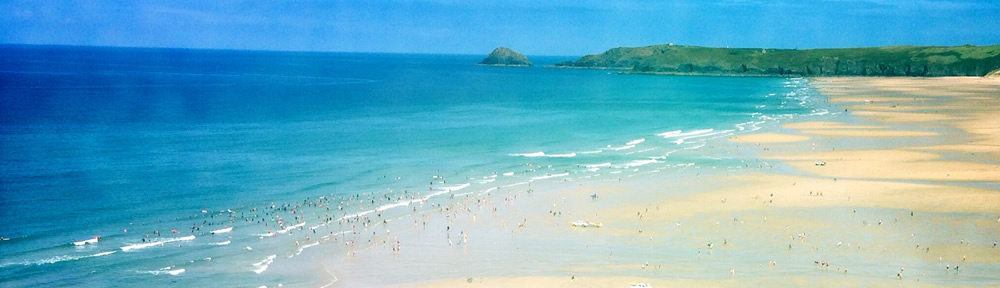
Came across this article about the proposed development off Tregundy Lane, which would be behind Silver Spray on Droskyn Point.
Will worms topple bid for 39 homes?
Thursday, June 23, 2011, 09:00PLANS to build 39 homes on farmland in Perranporth have sparked complaints from conservationists and residents, who are calling for it to be declared a site of special scientific interest (SSSI).
A colony of about 77 slow worms has been found on the five-acre site off Tregundy Lane along with
numerous birds and other protected species.And 226 residents living near the proposed development are submitting a petition calling for the application to be rejected and the proposed estate, which includes 26 affordable homes,
moved to a different location.Giving its initial response to the outline planning submission by Tescan Ltd, Cornwall Wildlife Trust’s deputy conservation manager, Cheryl Marriot, said the site was likely to qualify as a Biodiversity Action Plan (BAP) priority habitat.
In a letter to Cornwall Council’s planners stating the trust was likely to object to the application, she said:
“…it is likely this site will suffer an overall negative impact post-development due to the loss of BAP habitats and the impact upon slow worms”.
Father of four Robert Pearson, who has lived on Droksyn Way for 12 years, said the development sits next to an Area of Outstanding Natural Beauty (AONB) where there are 90 species of butterflies and moths.
He said: “People want affordable houses but these are likely to be too expensive. There is massive opposition to the scheme which borders the heritage coast.
“I have contacted several wildlife groups. We want the area to remain unspoilt. It hasn’t been touched for more than 20 years and is a beautiful site which we want to protect and get declared an SSSI.”
He has written to Minister for Climate Change, Biodiversity and Waste Joan Ruddock asking for her support.
To offset the environmental impact, independent ecological consultants, commissioned by Tescan Ltd, said the slow worms could be relocated, which would take up to 90 visits to an alternative location.
A wildlife reserve would also be maintained at the site and bird and bat boxes placed on the new homes.
Up to 187m of new Cornish hedgerows would also be created.
Councillor Ken Yoe said the plans were still at the early stage and it was important to balance the needs of those wanting affordable homes and the environmental impact.
He said concerns had also been raised regarding the access along Cliff Hill.
There are about 130 people in the resort, he added, on the register for local affordable housing.
A great list.
OK US biased, but easy to adapt to UK living.
1 – Grow your own food.
2 – Eat less meat.
3 – Cut down on processed foods.
4 – Don’t eat foods or drink from BPA-lined containers.
5 – Open windows to let in fresh air.
6 – Open blinds to let in natural light.
7 – Fight “vampire power”. (ie appliances on standby, that still consume energy, sometimes lots!)
8 – Get energy-efficient appliances and electronics.
9 – Take shorter showers.
10 – Wash clothes using cold water.
11 – Hang clothes on a clothesline to dry.
12 – Use leftover bathwater or “greywater” to water plants.
13 – Turn off lights when not in use.
14 – Turn off water when brushing teeth.
15 – Don’t let water run while washing dishes.
16 – Run the dishwasher or washing machine only when there is a full load.
17 – Use waterless car wash to wash your car or bike.
18 – Take public transportation.
19 – Walk or ride your bike.
20 – Use a proven fuel additive when you do drive.
21 – Combine multiple errands into one trip.
22 – Get rid of chemical cleaners.
23 – Use natural materials to clean.
24 – Make your own natural shampoo.
25 – Make your own natural lotion, skin masks and cleansers.
26 – Get outside every day for some sunlight and fresh air.
27 – Print documents as little as possible.
28 – Recycle bottles, cans, newspapers, etc.
29 – Donate items you no longer need or use.
30 – Use reusable bags at the grocery store.
31 – Use reusable containers at home.
32 – Make meals using leftovers.
33 – Freeze foods before it goes bad.
34 – Reduce your food waste.
35 – Compost.
36 – Plant a tree.
37 – Start or contribute to a community garden.
38 – Landscape your own yard with native plants.
39 – Buy used rather than new.
40 – Set thermostat 1-2 degrees lower.
41 – Get a reusable water bottle (and use it!).
42 – Opt for paperless billing.
43 – Pay your bills electronically.
44 – Do a home energy audit.
45 – Fix any leaky faucets to prevent water waste.
46 – Turn old t-shirts into “new” cleaning rags.
47 – Get rid of one-use items (disposable razors, diapers, plasticware, etc).
48 – Read magazines, newspapers and other publications online.
49 – Unsubscribe or cancel all junk mail.
50 – Unplug at least once a day so that you can enjoy nature and the environment around you.
The Code For Sustainable Homes (CFSH) is a government established national standard for the design AND construction of properties.
Level 0 is equivalent to a Building Regulation pass.
Level 6 is a zero carbon house with at least 17.6 points via the CFSH scheme.
“The Code measures the sustainability of a new home against nine categories of sustainable design, rating the ‘whole home’ as a complete package. It covers Energy/CO2, Water, Materials, Surface Water Runoff (flooding and flood prevention), Waste, Pollution, Health and Well-being, Management and Ecology.” (From www.communities.gov.uk/planningandbuilding/sustainability/codesustainablehomes/)
There is a nice 4 stage explanation of a strategy to achieve a high CFSH score at http://www.wolseleyselfbuild.co.uk/sustainable-build-eco-homes:
The PDF of the CFSH covers: