Wood Vs Other Construction Materials

http://www.treehugger.com/files/2011/07/more-proof-that-wood-is-the-greenest-building-material.php?campaign=weekly_nl

Every time you see a wood building, it’s a storehouse of carbon from the forest. When you see steel or concrete, you’re seeing the emissions of carbon dioxide that had to go into the atmosphere for those structures to go up.

Chatting to one developer company, yes wood doesn’t have any thermal mass, but when you are heating (or cooling) the building, you don’t need to also heat (or cool) the physical ‘thermal mass’ structure either.

Triple glazed windows PLUS minimised environmental impact during manufacture!

Ecoplus3 is our new flagship range of handcrafted windows and doors, for beautiful, sustainable homes. Made in our workshops in West Yorkshire, Ecoplus3 comes with triple glazing as standard* and systematically addresses the environmental issues relating to window manufacture. Ecoplus3 is the third evolution of our Ecoplus range since its launch in 1995, taking its thermal performance to a new level.

More details at http://www.greenbuildingstore.co.uk/page–ecoplus-natural-timber-windows-doors.html

Low Carbon Living Experiment Ends. Did The Lindell Family Achieve a One Tonne Life?

An interesting article on this great project to try and live at 1 tonne per person.

http://www.treehugger.com/files/2011/06/low-carbon-living-experiment-ends-one-tonne-life-results.php?campaign=daily_nl

It seems the “rucksack” (or baggage) of CO2 from the construction of where we live and what we use is what stopped them getting to the target 1 tonne:

Their “rucksack” of 900 kilograms stopped them from reaching the one tonne target. This “rucksack” consists of the CO² emissions that take place when various products are manufactured, such as the house, solar panels, car, furniture and clothes. However, they demonstrated that it is possible to get very close to one tonne, however it does involve a change in lifestyle and the information to make the right changes.

So, you can massively reduce your CO2 impact !

– Transport emissions dropped more than 90%
– CO2 emissions produced in the home were halved
– Food carbon emissions were reduced 84% by going vegan
– Manufacturing of house and goods prevents a ‘One Tonne Life’

The family used to live at “a regular high of 7.3 tonnes”. The new systems and way of living comfortably got to comfortably reach a constant low of 2.5 tonnes. Then “through a strict diet of using one less room in the house, no TV, no shopping and only eating vegan food they managed to reduce their footprint to 1.5 tonnes per person.”


Buyer Beware :: Solar panel selling scam

An interesting article on the danger of listening to sales people who are probably very commission driven and not necesarily regulated very efficiently (by the goverment, their industry or their firm).

http://www.theregister.co.uk/2011/06/24/solar_misselling/

Solar panel selling scam shown up by sting

Solar panel sales cowboys are – surprise! – exaggerating the benefits of the energy technology, a sting operation by consumer magazine Which? has found.

Which? invited 12 solar companies to survey a house and produce cost and benefit estimates for a solar PV system. Seven out of the 12 recommended putting the panels in the shade, and some overestimated the benefits by thousands of pounds.

“It seems extraordinary that the Government’s rules require companies to ignore whether you live in Cornwall or Scotland when working out how long it’ll take to pay for the solar panels,” says Which? executive director Richard Lloyd. “It’s obvious that the more sun you get, the faster the payback. The Government has to put this right.”

Evidence of pressure selling was also unearthed.

The generous feed-in tariff (FIT) – whereby the taxpayers subsidises the ‘surplus’ electricity for a domestic solar installation by paying several times over the market price – has seen a rush of middle-class households seeking to install solar PV units. For the well-off who can afford one, it’s printing money; and has been condemned as a regressive wealth redistribution by some prominent Greens. Sort of like Robin Hood in reverse.

Strangely Which? ignores this aspect.
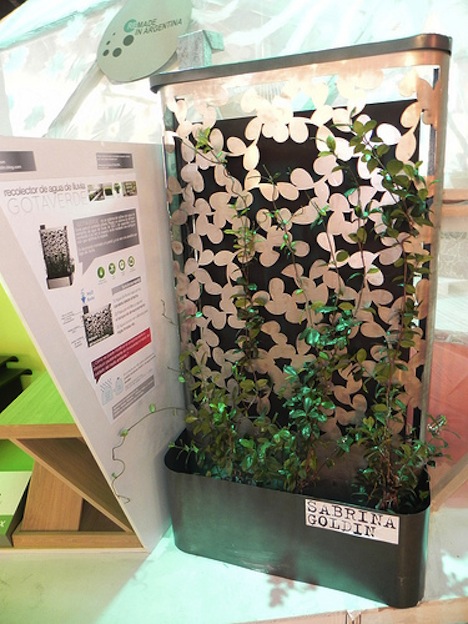
Solar panel selling scam

On Wednesday the Energy and Climate Change department DECC published its microgeneration strategy. It’s become a political flagship for the Conservatives, as this passage notes:

Such projects can engage individuals, neighbourhoods and communities in becoming involved with generating local heat and power. This offers a powerful symbol of the move from centralism to local action – the ‘Big Society’ in the UK’s energy landscape.Power to the people? They probably believe it, too.

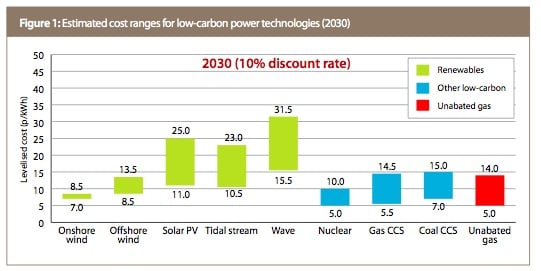
The predicted rise of solar

A list of predictions that argue the dramatic rise of solar power over the next 5 to 50 years.
http://www.fastcompany.com/1760900/five-energy-predictions-for-the-future?partner=rss

  • Solar Energy Will Be More Economical Than Fossil Fuels In 10 Years
    – but only if the solar industry continues to rapidly improve solar cell efficiency and create economies of scale
  • Solar Power Will Be As Cheap As Coal in Two Years
    – But what of our natural  gas glut? Will that slow solar development?
  • Natural Gas Will Kill Renewables
    – In part because renewables are weather dependent, so utilities will always opt for always-on fossil fules.
  • Renewable Energy Use Will Grow, But So Will Coal And Natural Gas Use
    – so carbon emmissions will continue to rise 🙁
  • We Could Power 100% Of the Planet With Renewable Energy By 2050
    – The only problem: somehow beating back the fossil fuel industry to a point of nonexistence. This is a pipe dream at best–but one that we should at least aspire to.

The economics of solar panel installtion

A bit of an eye catching headline “Solar Panels Never Make Economic Sense, Says Fuzzy Math” that first points out the well know detail “that insulation, weatherization and other energy efficiency measures should come before solar”.

Or to put it another way, “Adding photovoltaics to a non energy-efficient house is like exercising to burn off cake – much more efficient to stop eating cake…”. Not that sure about this quote. Eat cake and then exercise a bit more makes perfect sense to me! OK, I do get it, the environmental hit of an inefficient house just doesn’t stack up. Step 1 make the building / property as environmentally efficient as you can, BEFORE you then sort out how you provide the energy sources.

Back to the linked article, it did end that if you include some assumptions on future electricity prices, feed in tariffs etc. the article ends with the estimated “current payback of power-generating PV panels was 13 years”. As the PV panels should last 20+ years, that means they should be a good economic investment too.