Automatic fire !

Scandinavian HWAM fires have a heat sensitive spring that auto regulates the amount of air going into the combustion chamber of the fire, so that you continually get optimised buring of the wood:

  • More heat from the same amount of wood
  • Less ash
  • Less hassle
  • Less soot on the glass.

Video that shows the auto system (jump to 1 minute in !).

Above picture of the HWAM I30/55 that has the Nordic Ecolabel. For more info see

http://hwam.com/products/insert+selection/hwam+i+3055

Fire Heat Storage / Thermal Store

Create a thermal mass, with the chimney around the fire, so that post the fire dying out heat is slowly released into the room.

HWAM have a page on their soapstone system at http://hwam.com/hwam+advantages/heat+storage

UK HWAM Distributors:


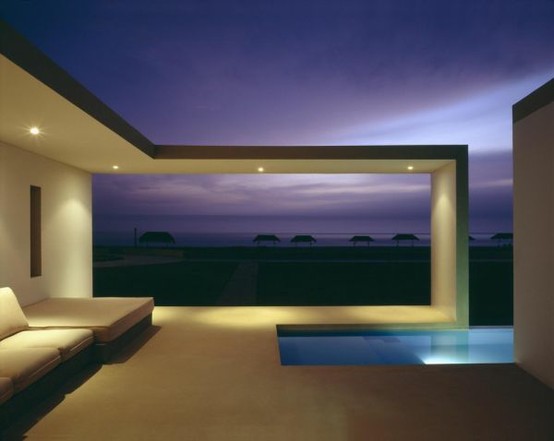
Frame the sea view ?

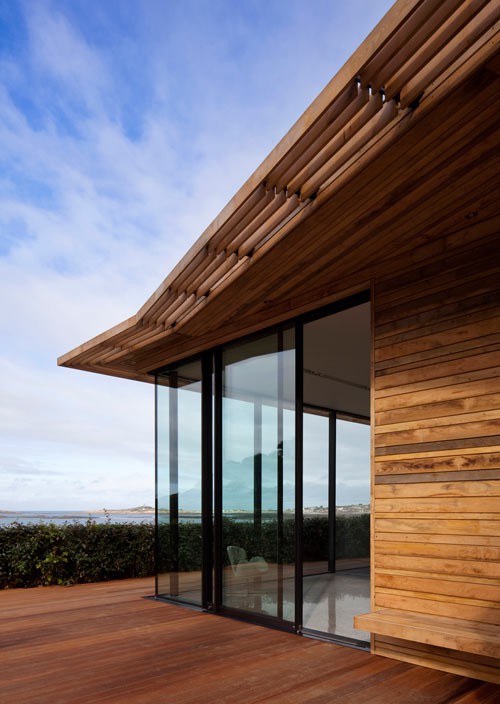
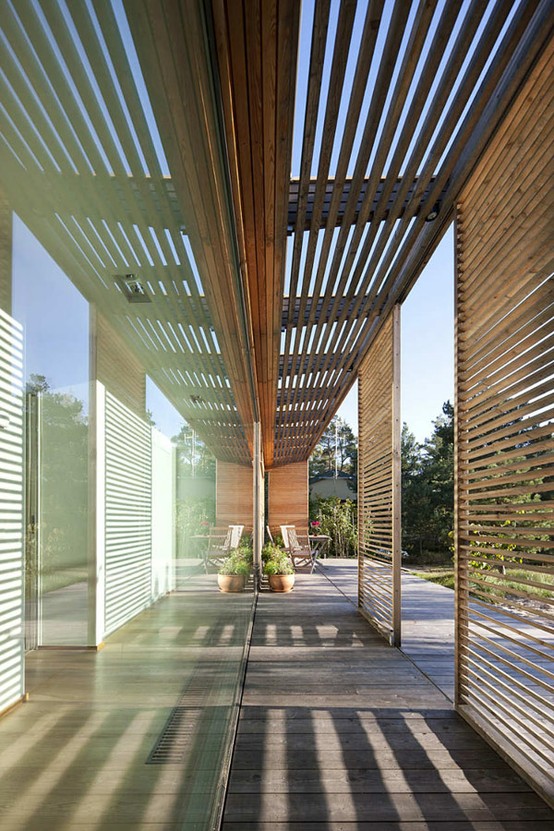
How about, as suggested ages ago by Jo Brannan, reducing some of the north, sea facing glazing (glass windows, doors, panels) to have more of a frame on the view.

Yes it’s great to have some rooms where it’s full whack the view, where the end side walls, roof and floor are the frame.

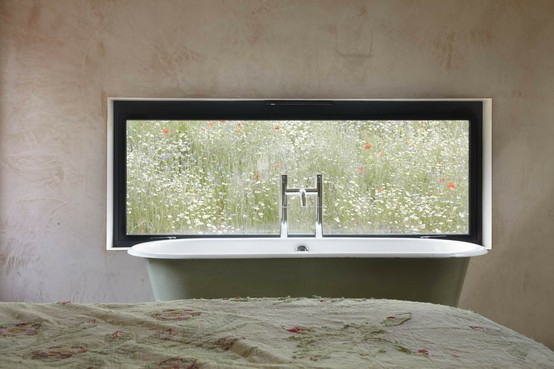
But maybe some other rooms have less glazing. Walls are also much more thermally efficient and cheaper for the heating efficiency of the building.

This extreme framing (ie mostly wall Vs small window) works to amazing effect.

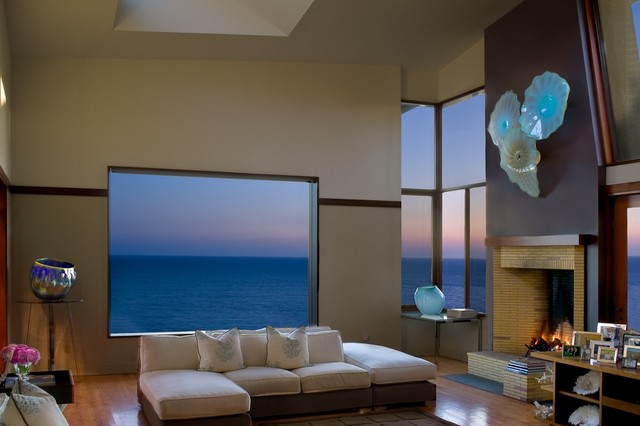
The above photo is from www.houzz.com

For this endless ocean view, instead of the windows going floor to ceiling, the designer chose to pull the focus tight by using a smaller window. The minimally framed window creates the look of art on the wall and brings your attention to the balance of sea and sky and the subtle gradient of color.

It seems almost any frame, can end up adding to the view:

Second pre-app meeting with Cornwall Council

Today, Robert (the architect) and I had our second pre application meeting with Cornwall Council.

The first pre-app was great. We felt the verbal meeting and post meeting written response were both very positive. They wanted some tweaks / work done on 2 small areas. The first was more that we hadn’t covered that we were making all the considerations we should. We did have it all covered, but this was written up in the pre-application we made. The second was that they felt we could change the treatment of one of the areas to visually improve it.

So this second pre-app was to go over our submitted suggestions and ideas. The planning officer had a preferred option, which, in our view, looks great and lets us crack on with finalising plans.

The next step is to run the general scheme past a few potential builders, and probably a structural engineer and probably a Quantity Surveyor (QS) so that we can confirm it’s all feasible to build and that the budget is sufficient for the current plans and ideas.

Guest room tips from Houzz.com article

“Impress Your Guests: 8 Tips for Gracious Guest Rooms”

from http://www.houzz.com/ideabooks/2522280/list?utm_source=Houzz&utm_campaign=u109&utm_medium=email&utm_content=gallery19

An assortment of books. – nice idea

A folding luggage stand. – not so sure

  1. Piles of pillows. – yup
  2. Hooks and hangers. – nice idea
  3. A coffee bar. – not so sure, come and socialise !
  4. A well-outfitted bed side table. (water glass, small bowl for things) – nice.
  5. Fresh flowers. – depends
  6. Robes and slippers. – not sure about the slippers

A nice post about Accoya wood

http://blog.emap.com/footprint/2011/08/08/accoya-used-to-build-bridge-in-the-netherlands/

I’ve since learnt that (unless it’s changed and the info is out of date or wrong) that Accoya wood is grown in NZ & treated in the Netherlands. So the transport carbon footprint isn’t great. It’s then consequently expensive.

http://www.gowercroft.co.uk/2013/03/what-is-accoya-timber/

“The downside to this material is that while the trees are grown in New Zealand and the acetylisation process occurs in The Netherlands, it will always be expensive. The raw timber costs three times as much as our standard hardwoods.”

The geographic growing and processing isn’t mentioned on the Accoya website that does cover a lot of other good environmental aspects of Accoya:

http://www.accoya.com/sustainability/

Polar bear inspired external wall heating system

Follow the bears

The biomimicry-based technology imitates the effect of fur on polar bears, the individual hairs on the polar bear being hollow and guiding sunlight directly to the skin. As the polar bear’s skin is black, it is able to absorb light efficiently, and convert it into heat which it transfers to the body.

http://www.building4change.com/page.jsp?id=1339

External wall insulation system (EWIS) specialist Sto has brought its StoSolar solid wall heating system concept from Germany to the UK market.

The system incorporates a translucent glass render finish covering tiny capillaries that guide sunlight to a black absorbent layer, which converts solar to thermal energy. The masonry stores this heat and releases it back into the building as radiant heat, reducing the internal heating requirement.

Low sun means high heat

The amount of heat generated by the system depends on the angle of the sun. In summer, when the sun is high in the sky, less radiant energy is absorbed by the capillaries, so the heat generated is greatly reduced. In the winter, the low angle leads to the maximum amount of sunshine being transmitted to the absorbent layer ensuring that most heat is produced during the cold months.

StoSolar integrates into a Sto EWIS and is suitable for new and existing buildings when fixed to a solid wall that is not internally insulated. It will generally use 10-30 percent of a façade’s insulating surface area and be delivered to the construction site as prefabricated units to be incorporated into an external wall system.

Solar Panel Feed In Tariff Update (FIT)

From http://www.building4change.com/page.jsp?id=1305

The tariff for a small domestic solar installation will be 16p per kilowatt hour, down from 21p, and will decrease on a three-month basis thereafter, with pauses if the market slows. All tariffs will continue to be index-linked in line with the retail price index (RPI) and the export tariff will be increased from 3.2p to 4.5p. The new tariffs are expected to give a return on investment (ROIs) of more than 6 percent for most installations, and up to 8 percent for the larger bands.

The scheme lifetime will be reduced from 25 years to 20 years for new solar installations.

FIT changes

  • Tariffs for solar PV installations from 1 August to be 16p/kWh for household scale solar PV installations. Tariffs for larger installations are also to be reduced
  • Multi installation tariff will be increased to 90 percent of standard tariff. Organisations with more than 25 PV installations will get 90 percent of the standard applicable tariff, increased from 80 percent
  • Average tariff reductions of 3.5 percent every three months. Reductions will be bigger (up to 28 percent) if there is rapid uptake.
  • Tariff cuts will be skipped (for up to two quarters) if uptake is low. Uptake in three different bands (domestic (size 0-10kW), small commercial (10-50kW) and large commercial (above 50kW and standalone installations) will determine the quarterly reductions within those bands.